
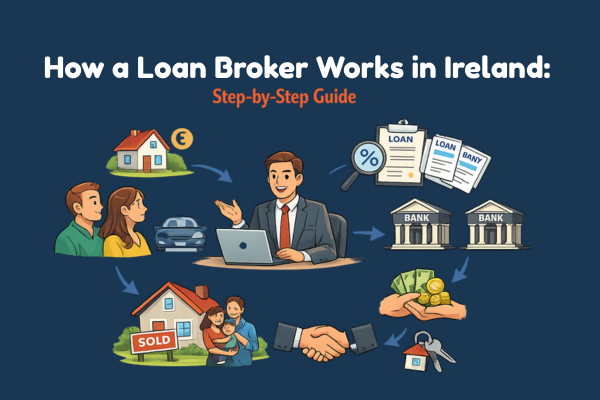
How a Loan Broker Works in Ireland: Step-by-Step Guide?
In today’s time, taking a loan has become very easy. Through online loan applications, loans can be approved within just a few minutes.
However, the biggest challenge is that there are many lenders available in the market, all offering different interest rates, approval conditions, and repayment terms.
Due to this, choosing the right lender becomes a difficult task for borrowers. This is why hiring a loan broker in Ireland is significant.
Irish borrowers need loan brokers for all borrowing needs
In Ireland, loan brokers are mainly used for business loans, personal loans, mortgages, and bad credit loans.
Every loan broker works with certain lenders and offers customised deals according to the borrower’s needs. In this process, the applicant’s credit score, financial situation, and income are important factors.
Through this guide, let us understand how loan brokers work, their benefits, risks, and how they compare with direct lenders.
What is a loan broker?
A loan broker works as a bridge between the lender and the borrower. By using a loan broker, borrowers can receive loan quotes from multiple lenders through a single application. This makes it easier to compare different loan options in one place.
What Does a Loan Broker Do in Ireland?
A loan broker’s role is to connect lenders and borrowers and match loan applicants with suitable loan products and lenders. Brokers do not lend funds themselves; instead, they act as intermediaries between both parties.
The primary responsibilities of a loan broker include:
- Comparing loan offers
- Checking eligibility for loan applications
- Helping borrowers complete loan applications
- Explaining loan terms and conditions
- Saving borrowers’ time and effort
For example, if someone needs a personal loan, a loan broker sends the applicant’s details to multiple personal loan lenders. Those lenders then provide loan quotes based on the borrower’s repayment ability. The borrower can compare all these loan quotes on the broker’s website and choose the loan offer that suits them the best.
How Does the Loan Broker Process Work Step by Step?
Let us understand how loan brokers in Ireland offer loan comparison services.
Step 1: Borrower Submits a Loan Query
In this step, a borrower or fund seeker submits a loan request through a loan application form. This is usually done through an online application form that takes only a few minutes to complete.
The borrower may need to provide information such as:
- Full name and contact details
- Monthly income
- Employment information
- Bank account details
- Existing debts
- Desired loan amount
Step 2: Review of Application by the Broker
In this step, the broker reviews the received application so they can obtain loan quotes from relevant lenders.
Brokers usually check:
- Affordability
- Income stability
- Employment status
- Credit history
- Loan purpose
Through this process, loan brokers identify which lenders from their registered panel are most suitable for that specific borrower’s application.
Step 3: The Broker Matches the Borrower with Lenders
In this step, the broker matches the borrower’s loan requirements with lenders according to the applicant’s affordability and financial situation.
Different lenders have different rules. Some lenders focus more on repayment ability and may approve loans even for borrowers with bad credit scores. Others may require a good credit score.
To find the best match, brokers search for factors such as:
- Competitive interest rates
- Fast approval options
- Flexible repayment periods
- Higher approval chances
These are the same features most borrowers look for in a loan offer.
Step 4: Lender Receives the Application for Review
In this step, lenders receive the application forwarded by the broker and review the borrower’s repayment ability.
Lenders perform an affordability check. Hence, they may
- Verify income documents
- Perform credit checks
- Confirm identity details
- Review bank statements
Step 5: Borrower Gets the Loan Offer
Once lenders complete their review, they share loan offers for the borrower through the broker’s platform.
These loan offers generally include:
- Interest rate
- Loan amount
- Monthly repayment amount
- Loan duration
- Extra fees (if applicable)
- Total repayment cost
Step 6: The Borrower Accepts the Loan
The borrower compares and explores all available loan offers and then makes a decision.
Before signing the loan agreement, borrowers should carefully read factors such as:
- Interest rate
- Early repayment rules
- Late payment penalties
- Default conditions
Step 7: Funds Are Transferred
This is the final step. After the borrower accepts the loan offer, the relevant lender transfers the funds to the borrower’s bank account.
In most cases, borrowers receive funds:
- Within a few hours
- Within one business day
- On the same day
Is Using a Loan Broker in Ireland a Good Idea?
You can know better if you know the advantages and disadvantages of using a broker in Ireland.
Advantages
Read the strengths of using a loan broker for borrowing funds.
1. Saves Time
Instead of contacting multiple lenders separately, borrowers can connect with just one loan broker. They compare offers from many lenders in one place. This makes the loan search process faster, easier, and more convenient.
2. Helpful for Bad Credit Borrowers
Borrowers who are struggling to get loans because of a bad credit history can also benefit from loan brokers. Brokers help them find relevant lenders who may be more willing to consider their application based on repayment ability and overall financial situation.
3. Access to Many Lenders
By using a loan broker, borrowers can access multiple lenders on a single platform. This saves time and makes it easier to compare different loan options without applying separately to each lender.
4. Support During the Process
While applying for a loan, borrowers may face doubts or problems during the application process. Loan brokers help borrowers complete the application smoothly and provide guidance throughout the process.
Disadvantages
These are some challenges of hiring a loan mediator. Every borrower should know about it.
1. Limited Lender Network
A loan broker may work with only a limited number of lenders. Because of this, borrowers might not get access to all loan options available in the market.
2. Possible Broker Fees
Some brokers may charge brokerage or service fees, although this is not common in most cases. Generally, brokers receive their commission from lenders rather than charging customers or borrowers directly.
Do Loan Brokers Charge Fees in Ireland?
Not all, but some loan brokers charge a brokerage fee. They get paid by lenders, while some charge a service fee from borrowers as well. As per lending rules in Ireland, brokers have to reveal their fee structure.
As a borrower, you should always confirm about brokerage, upfront costs and hidden costs before applying for funds.
Can a Loan Broker Help if You Have Bad Credit?
Even if a borrower has a low credit score, a loan broker may still be able to help. Usually, finding lenders in a bad credit situation can be difficult. However, because of new-age FinTech lending solutions, many loan companies now also offer funds to bad credit borrowers.
Some lenders specialise in bad credit lending, which helps fund seekers access loans more easily. However, for approval, the loan applicant must have a strong current repayment capacity.
In particular, the borrower’s payment record for the previous six months is often considered very important. It means paying debts and bills on time before applying to a broker. It helps the mediator find lenders that offer bad credit loans.
Loan Broker Vs Direct Lender: What’s the Difference?
Here is a difference between a loan broker and a direct lender. Comparison will help you make a rational choice between the two.
| Feature | Loan broker | Direct lender |
| Role | Connect fund seekers to lenders. | Provide loans directly to loan applicants. |
| Loan options | Multiple loan options to compare. | Offers its own loan solutions only. |
| Best for | Borrowers who want to compare multiple deals. | Borrowers who already prefer a lender |
| Convenience | Saves time by matching to many lenders at one place. | Borrower needs to find and compare lenders separately |
| Credit support | Can help get matched with bad credit lenders. | May have stringent lending rules for bad credit borrowers. |
Final Thoughts: Should You Use a Loan Broker in Ireland?
The brokers are not only helpful for borrowers, but also act as a support system for lenders.
Loan brokers run affordability checks on borrowers’ applications before forwarding them to lenders. Because of this, lenders mostly receive applications from borrowers who are more likely to qualify for approval. This saves lenders’ time and also helps reduce the chances of loan defaults.
On the other hand, borrowers can receive affordable loan offers from multiple relevant lenders within just a few minutes. Broker platforms are mainly used for unbiased loan comparison.
Also, their services for all borrowing solution types are available. From a personal loan broker to a mortgage broker, options are available. After you are clear about the role of a broker, decide and act for your next loan need.
FAQs
Is a loan broker the same as a lender?
No, both are considerably different. A broker matches you to varied lenders and their loan offers. It does not provide funds. A lender provides funds but sells only its own loan products.
Does using a broker affect your credit score?
No, a loan broker never affects your credit score. It only runs a soft check to know your affordability at an initial level and matches with the lenders. Once you choose a lender, it performs a detailed credit check. That affects the credit score for a temporary period of time.
Are online loan brokers safe in Ireland?
Yes, using a broker is safe in Ireland, as there are set rules for loan brokers as well. They also work under a regulated financial system.
Do brokers charge upfront fees?
Not all brokers charge an upfront fee, but some do. When you search online for brokers, look only for no-fee brokers. This improves the chances of receiving the relevant results.

Ava is Editor-in-Chief at Givemyloan and is known for her deep and practical approach to modern personal finance. She has written several articles covering topics like personal loans, business loans, etc. Coming from an economics and finance background, she has worked behind the scenes to curate informative content to help borrowers identify the right loan option.
Ava’s role at Givemyloan lets her combine her interest in writing with her curiosity to explore the finance realm. She likes to be updated about what is happening in the lending industry. Most importantly, she tries to instil her knowledge in her writing in the best way possible.
She is passionate about helping borrowers look beyond the general features of a loan, i.e. about the fees and other intricate details. When she is not writing, she likes to read contemporary fiction. She is on a mission to help educate people looking for loans so that they take the right route.


